

How to Sell More to Existing Customers
Existing customers already know your business, making them a valuable audience for relevant new products and services. Start by understanding what they bought, what they need next, and where your business can offer useful support. Want help building retention campaigns? See our services.
AI-Powered Customer Insights
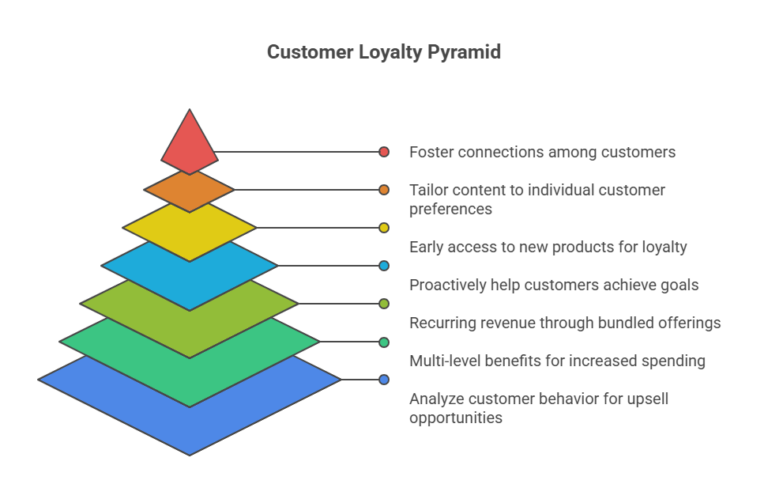
Review purchase history and engagement data to find patterns that suggest a useful next offer. For example, a landscaping company might invite past garden-installation customers to book a seasonal maintenance visit. AI tools can help identify patterns, but their suggestions are predictions, not proof of what a customer wants. Check recommendations against actual purchases and feedback before expanding them.
Tiered Loyalty Programs
A loyalty program can reward repeat purchases with benefits customers actually value, such as useful service upgrades or a straightforward discount. Tiers may make sense when customers buy frequently enough to reach them; a simple reward can work just as well for other businesses. Calculate the cost of each benefit and make the requirements easy to understand. For more ideas, see why retention marketing matters.
Subscription Models
A subscription can be useful when customers have a recurring need. For example, a maintenance business could offer scheduled visits as a package instead of asking customers to book each one separately. Explain the price, what is included, the renewal terms and how to cancel, and make sure the package offers real convenience or value.

Customer Success
Help customers get results from what they have already purchased. A timely check-in, onboarding guide or maintenance reminder can uncover problems and show where additional support would be useful. This approach to customer success builds on service rather than replacing it: respond to issues as well as offering proactive guidance.
Exclusivity Through Early Access
Invite interested customers to try a new product or service before a wider launch. Explain what they will receive and ask for feedback; early access is most useful when the offer fits the customer, rather than being presented as a reward everyone wants.
Personalization at Scale
Use relevant customer data, such as past purchases or stated interests, to group customers and tailor recommendations. Respect their communication preferences and keep messages useful. Compare a personalized offer with a similar general offer, then check purchases and feedback to see whether the extra effort is worthwhile.

Brand Community
Consider a customer event, user group or online community when people have a reason to share ideas or learn from one another. Start with a small, useful activity and ask participants what they would like next; a community needs ongoing attention to be valuable.
Final Thoughts
Choose one tactic that matches a real customer need, then measure the result. Track repeat purchase rate (customers who buy again divided by customers in the group) over a consistent period, alongside revenue and profit after discounts or service costs. Compare similar customer groups where practical, and use feedback to improve the offer before scaling it.